DOCUMENTED PROJECT FROM DENMARK
Basement flooding after heavy rain: pumping and perimeter drainage
A Danish project report describes approximately one metre of water in a basement after a cloudburst in 2024. The case separates emergency pumping from the later work to manage water around the building.
By Basement Atlas · Published
Original project and source ↓
Project at a glance
- Event
- Cloudburst in 2024
- Water depth
- About 1 metre, as reported by the contractor
- Initial response
- Pumping out the water
- Subsequent work
- Perimeter drain, pump chamber, inspection chamber and external drainage insulation
Two different tasks in one project
KÆLDER-RENOVERING reports that water entered through the basement walls during heavy rain. The team first helped empty the basement; work outside the house followed. This sequence is the useful distinction in the case. Removing the water deals with the immediate accumulation, but an empty room alone says nothing about what will happen during the next storm.
The later drainage system
The project description records a perimeter drain with drainage pipework, a pump chamber, a chamber for inspection and flushing, and external drainage insulation at the basement walls. These are different parts of collecting water, moving it onward and retaining access for checks. Drain levels, design capacity, ground investigation and project cost are not provided. The photographs cannot supply those missing details.
What is known about the outcome?
The original report relays the customer's feedback that the problem has not returned, including during subsequent heavy rain. This is a reported experience at one property. No independent monitoring series or precise feedback date is supplied. The photographs show flooding and pumping equipment; they do not show the completed buried drainage system.
The project in photographs
Three original photographs from the emergency response. The later drainage system is described in the source and is not pictured here.
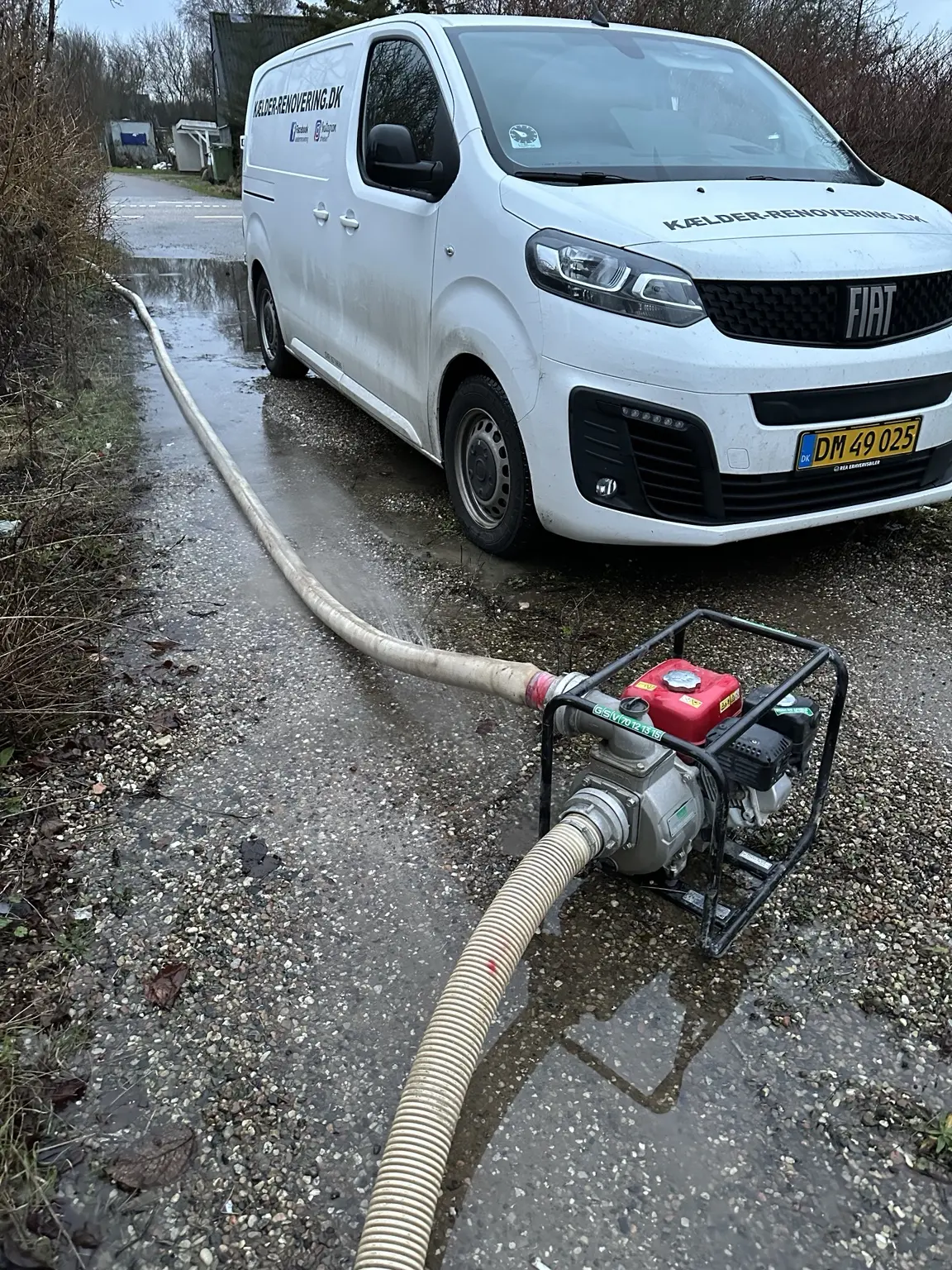

Project documentation from KÆLDER-RENOVERING, a renovation business connected with Basement Atlas. A photographed result is not a long-term performance test.
What to compare with your own project
- Separate the event record from the solution record: when did water appear, where was it seen, and what was subsequently changed?
- Ask for records of work that will be buried and information about inspection and maintenance access. A photograph of a dry basement cannot replace this evidence.
- Record later heavy rain and any recurring dampness. Observations become more useful when the date and conditions accompany them.
Original project and source
This account is based on the project report and original photographs from KÆLDER-RENOVERING, a business connected with Basement Atlas. The text was prepared with AI assistance; no independent technical inspection was carried out. The original report is in Danish.
Read the original project at KÆLDER-RENOVERING ↗Guides for your next step
Compare your experience
Has heavy rain flooded your basement? Share your country, the year, what was changed and what happened during later storms. Please distinguish your own observations from information you were given.