Basement ventilation & condensation · BASEMENT ATLAS
Basement condensation in summer: when opening windows adds moisture
Warm weather does not necessarily dry a cool basement. Air entering through a window can reach its dew point when it meets the cold walls, floor or pipes.
The short answer
For condensation risk, compare outdoor dew point with the coldest relevant surface. For the drying potential of ventilation, compare outdoor and indoor dew points. The outdoor relative-humidity percentage alone is not enough, and 'always ventilate at night' is not a reliable rule for every climate.
Why summer air can wet a cold wall
Dew point is the temperature at which air becomes saturated as it cools. If a wall is colder than the dew point of air reaching it, liquid condensation can form. Basement surfaces can remain cool while outdoor conditions change quickly.
Relative humidity is a percentage at the measured temperature. That is why comparing two percentages without the temperatures can be misleading. Use the two readings together to calculate dew point.
A worked example
Assume outdoor air is 26°C at 65% relative humidity, indoor air is 18°C at 70%, and the wall surface is 15°C. The approximate dew points are 18.9°C outside and 12.4°C inside. Although the outdoor humidity percentage is lower, its dew point is higher.
In this example, bringing the outdoor air to the 15°C wall can create condensation. The indoor air, under the stated conditions, has a dew point below that wall temperature. This example is calculated, not a measurement from a Basement Atlas project.
| Reading | Outside | Inside |
|---|---|---|
| Air temperature | 26°C | 18°C |
| Relative humidity | 65% | 70% |
| Calculated dew point | About 18.9°C | About 12.4°C |
Make a ventilation decision from measurements
- Measure temperature and humidity indoors and outdoors at about the same time. Keep the outdoor sensor shaded and protected according to its instructions.
- Measure a cold wall or pipe surface separately. Air temperature is not a substitute for the surface temperature.
- A lower outdoor dew point suggests potential to remove moisture through air exchange. Check surface conditions as well; air can still condense on an especially cold surface.
- If the readings are close, repeat them and account for sensor accuracy. Do not turn a small calculated difference into a confident yes/no decision.
Windows, ventilation systems and dehumidifiers do different jobs
An open window changes air, but the effect depends on outdoor conditions and airflow. A dehumidifier removes moisture from the air it processes; it does not provide fresh air. Mechanical ventilation needs a designed air path and controls suited to the space.
Do not close required combustion-air openings or disable a ventilation system solely because of a calculator result. A bathroom, occupied room, radon problem or combustion appliance introduces requirements beyond moisture removal. An installer should consider those needs together.
Check whether something else is contributing
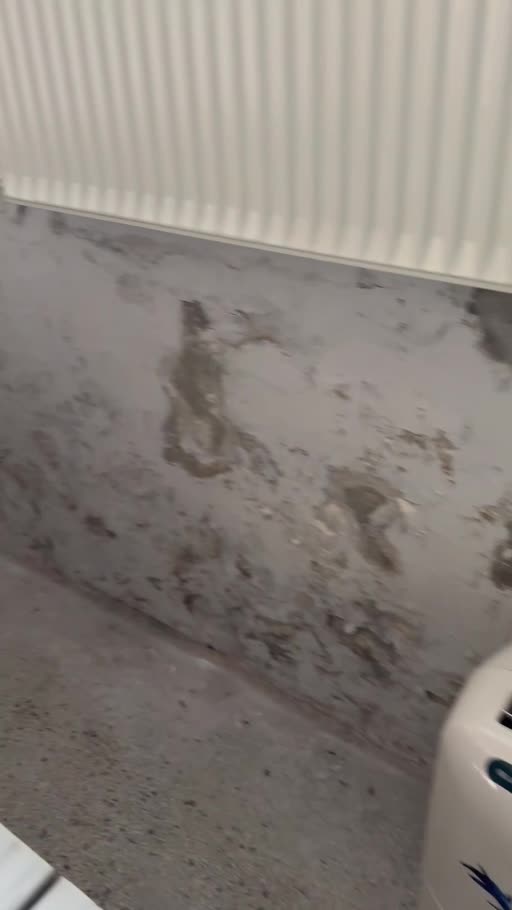
A seasonal pattern supports an investigation of condensation but does not rule out a leak. Record rainwater entry, plumbing use and damp marks at the wall-to-floor joint as separate observations. A cool surface can have both condensation and moisture coming through the construction.
Keep a record of the changes you make. If the room improves, repeat the comparison in another period of humid weather rather than treating a few dry days as proof that the problem is solved.
Sources and editorial basis
This guide was prepared with AI assistance using the listed sources and the project documentation identified in the text. It has not been signed off by an independent building specialist. Local construction requirements and the condition of the building still need to be checked. Editorial policy
Keep reading
Compare your experience
Does your basement become wetter in warm weather? Share your country, indoor/outdoor temperature and humidity, and whether you measured the cold surface as well.